Notre actualité
-
2026
Six Sigma Process: the true definition
le 29 avril- Paris: Understanding the statistical foundation behind the terminology and the true definition.
Table of Contents
- The Common Misconception
- The Math Behind ±3σ
- So What IS Six Sigma?
- Visual Comparison: ±3σ vs ±4.65σ
- The 1.5σ Shift Convention
- Critical Assumption: Normality Required
- Long-Term vs Short-Term Z-Values
- Two Methods to Calculate Z-Shift
- Key Takeaway
- Additional Resources
The Common Misconception
❌ Common Belief (INCORRECT)
"If a process has specification limits at +3σ and -3σ from the mean, it's a Six Sigma process."
There is a widespread misunderstanding among Lean Six Sigma practitioners: many assume that positioning specification limits at ±3 sigma from the process mean automatically qualifies the process as "Six Sigma."
This is incorrect.
The Math Behind ±3σ
If you consult a Gaussian (normal) distribution table also called a Z table, the probability of a data point falling outside ±3σ is approximately:
0.27%
= 2 × 0.135% (each tail)
= 2,700 DPMO
(Defects Per Million Opportunities)
That is far from the famous 3.4 DPMO associated with Six Sigma performance.
⚠️ Important Distinction
±3σ corresponds to a 6σ distance (3σ on each side = 6σ total width). That's all. It does NOT correspond to a 6σ process capability.
So What IS Six Sigma?
✅ Correct Definition
Under the Six Sigma convention (including the 1.5σ shift):
One-Sided Specification
A true Six Sigma process has a specification limit at:
4.5σ
from the mean
Two-Sided Specification
For symmetric specifications, limits must be at:
±4.65σ
from the mean
At ±4.65σ, the process achieves the 3.4 DPMO benchmark that defines Six Sigma performance (2 × 1.7 DPMO (each tail)).
Visual Comparison: ±3σ vs ±4.65σ
❌ ±3σ: 4.28σ Process (NOT Six Sigma)
LSL: -3.000Mean: 0.00USL: 3.0002,700 DPMO
0.27% defect rate
Equivalent to a one-sided specification of 2.68σ
Image: Normal distribution with specification limits at ±3σ showing defect probability of 0.135% in each tail.
✅ ±4.65σ :6σ Process (True Six Sigma)
LSL: -4.650Mean: 0.00USL: 4.6503.4 DPMO
0.00034% defect rate
Equivalent to a one-sided specification of 4.5σ ✓
Image: Normal distribution with specification limits at ±4.65σ showing defect probability of 0.00017% in each tail.
📊 See the Visual Proof
The carousel images from DMAIC Suite's Process Capability tool demonstrate this exact difference. The first slide shows ±3σ with 2,700 DPMO. The third slide shows ±4.65σ with 3 DPMO (accounting for the 1.5σ shift).
So if 3.4 DPMO corresponds to 4.5σ, why is it called a 6σ process?
Understanding the 1.5σ Shift ConventionThe Six Sigma methodology includes a 1.5σ shift assumption to account for process drift over time which is added to any long term σ value. This is why:
📍4.5σ +1.5σ shift = 6σ . We call it Z Short-term (or Z-Benchmark) = Z Long-term Z + 1.5 which gives Z Short-term = 6.00σ
Perfect process centering, no drift - Z being the number of σ
📊Long-term (Z Long Term): 4.50σ
After accounting for 1.5σ process shift
Short-term (Z Short Term): 6.00σ
🎯Result: 3.4 DPMO LT
= True Six Sigma performance level
When you apply the conventional 1.5σ long-term shift, specification limits at ±4.65σ from the mean - with Long-term data)- equate to 6σ short-term capability, which is Six Sigma performance.
Critical Assumption: Normal Distribution Required
⚠️ Important Prerequisite
Everything discussed above is only true if your data follows a normal (Gaussian) distribution. Before applying Six Sigma calculations, always verify normality using tests like Anderson-Darling, Shapiro-Wilk, or visual methods (Q-Q plots, histograms).
If your data is not normally distributed, the standard deviation and Z-value calculations will not accurately represent process capability. In such cases, you may need to:
- Transform the data (e.g., Box-Cox transformation) to achieve normality
- Use non-parametric methods or percentile-based capability indices
- Apply distribution-specific calculations (Weibull, Lognormal, etc.)
- Identify and remove special cause variation before assessing capability
💡 DMAIC Suite Advantage
DMAIC Suite's Process Capability tool automatically performs Anderson-Darling normality tests and displays the results with your capability analysis. You'll see a green "Data follows normal distribution" badge when your data is valid for standard Six Sigma calculations.
Long-Term vs Short-Term Z-Values
An important clarification that is often overlooked:
📊If you calculate a Z-value using long-term data...
The resulting Z-value is a long-term Z-value (Z Long Term).
⚡If you calculate a Z-value using short-term data...
The resulting Z-value is a short-term Z-value (Z Short Term or Z-Benchmark).
The distinction matters because the data collection term determines which Z-value you're calculating, not the formula itself. A Gaussian distribution table lookup will always give you a Z value result. Depending on whether your standard deviation was calculated from:
- Long-term data: include common cause variation and special cause variation - capturing process drift and shifts in addition to inherent process variation
- Short-term data: include common cause variation only, measuring inherent process variation
Going further... Two Methods to Calculate Z-Shift
To convert between long-term and short-term Z-values, you can use either a quick approximation or a precise calculation based on your actual data.
Method 1: Quick Six Sigma Convention (1.5σ Shift)
This is the standard industry approach used when you don't have detailed subgroup data:
Z Short-term = Z Long-term + 1.5
or equivalently:
Z Long-term = Z Short-term - 1.5
Example: If your long-term Z = 3.0σ, then your short-term Z-Benchmark = 3.0 + 1.5 = 4.5σ
This 1.5σ shift is an estimate based on empirical studies of process drift over time. It's widely accepted but is indeed a "makeshift solution" that may not reflect your actual process behavior.
Method 2: Precise Calculation from Rational Subgrouping
For a more accurate Z-shift specific to your process, calculate it from your actual data using rational subgroups:
Step 1: Calculate Two Standard Deviations
- σoverall (long-term): Standard deviation of all data points across all subgroups
- σwithin (short-term): Pooled standard deviation within subgroups only
Step 2: Calculate Z-Values
One-sided spec:
Z Long-term = (spec - μ) / σoverall
Z Short-term = (spec - μ) / σwithin
Two-sided specs (LSL & USL):
Z LSL Long-term = (LSL - μ) / σoverall
Z USL Long-term = (USL - μ) / σoverall
Obtain p(d)LT LSL and p(d)LT USL with Z table
p(d)LT total = p(d)LT LSL + p(d)LT USL
Get Z Long-term from p(d)LT total with Z table
Z LSL Short-term = (LSL - μ) / σwithin
Z USL Short-term = (USL - μ) / σwithin
Obtain p(d)ST LSL and p(d)ST USL with Z table
p(d)ST total = p(d)ST LSL + p(d)ST USL
Get Z Short-term from p(d)ST total with Z table
Step 3: Calculate Your Actual Z-Shift
Z-shift = Z Short-term - Z Long-term
Example: If your Z Long-term = 2.8σ and Z Short-term = 4.1σ, then your actual Z-shift = 1.3σ (not the assumed 1.5σ).
This method gives you the real shift in your process provided that your data follow a normal distribution. If your calculated shift is significantly different from 1.5σ, it indicates your process drift behavior differs from the Six Sigma convention assumption.
💡 Which Method Should You Use?
Use Method 1 (1.5σ shift) for quick estimates, benchmarking, or when you don't have rational subgroup data.
Use Method 2 (precise calculation) when you need accurate process capability assessment, have control chart data with rational subgroups, or are making critical decisions based on capability indices.
Key Takeaway
❌±3σ limits do NOT make a Six Sigma process. They result in 2,700 DPMO.
✅±4.65σ limits achieve Six Sigma performance. They result in 3.4 DPMO.
📐Understanding the statistical foundation behind the terminology matters. Precision in language reflects precision in thinking.
💡 Pro Tip
Use DMAIC Suite's Process Capability Analysis tool to instantly calculate Z-scores, DPMO, and visualize your process performance with automatic 1.5σ shift calculations.
-
2023
Discours public à l'invitation du HRDC, Interview avec la chaîne de télévision MBC et Remise de certificats Lean Six Sigma
le 20 juillet - Ebene, Ile Maurice
-
2023
Formation Green Belt module statistiques chez Natec-Medical
du 10 au 14 juillet - Ebene, Ile Maurice


-
2023
Formation Green Belt chez Haulotte France
du 9 au 12 mai - siège social H3, Lorette, France

-
2023
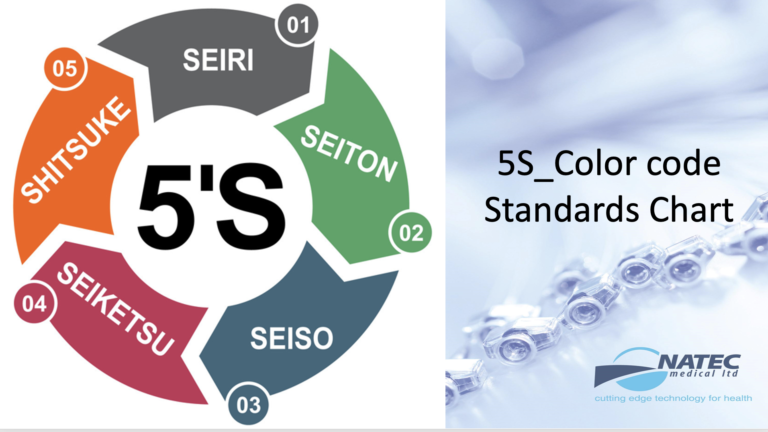
Kaizen 5S chez Natec-Medical
du 24 au 28 avril - Ebène, Ile Maurice



-
2023
Lean Six Sigma launching event with HRDC and MEXA
Le 20 avril - Ebène, Ile Maurice
Launching of training in “Capacity Building to Support Growth of the Medical Device Sector Phase II – Applying the Lean Six Sigma tools”
The Human Resource Development Council (HRDC) and the Mauritius Export Association (MEXA) are organising a Launching Ceremony for the training in “Capacity Building to Support the Growth of the Medical Device Sector Phase II – Applying Lean Six Sigma tools in various processes in the Medical Device industry.” This project is being implemented under the Sectoral Skills Development Scheme (SSDS) of the HRDC.
HRDC launching event annoucement
Capacity building to support growth of the Medical Devices Sector: Phase II – Applying Lean Six Sigma in various processes in the Medical Devices Sector (A certified training programme)
-
2023
Formation Lean Practitioner et Green Belt chez Natec-Medical
du 17 au 21 avril - Ebène, Ile Maurice

-
2023
Formations Yellow Belt chez Natec-Medical
du 11 au 12 avril et du 13 au 14 avril - Ebène, Ile Maurice


-
2023
Formation Executives chez Natec-Medical
Le 10 avril - Ebène, Ile Maurice

-
2023
Formation Green Belt chez Haulotte-US
du 6 au 9 mars - Archbold, Ohio, USA